No Whitepaper at the Table: A Bitcoin Cash Talk Track for the Holidays
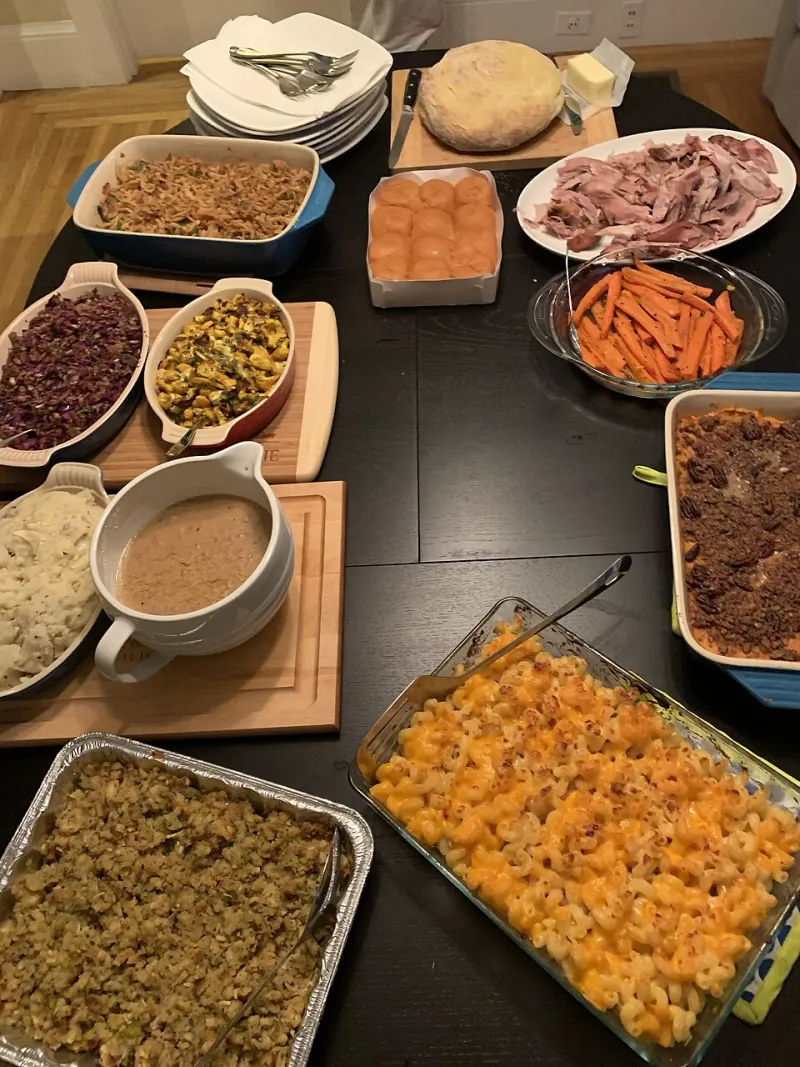
Photo: HaJunkiyada, CC BY-SA 4.0, via Wikimedia Commons
Thanksgiving is a great time to see family and a terrible time to launch into a tokenomics presentation. If you use Bitcoin Cash, you have probably had that moment: someone asks what you are into, you say BCH, and suddenly you are defending every exchange collapse and every meme coin from the last decade.
You do not need to win that debate. You need to be understood. The goal is not to turn your uncle into a node operator before the pie comes out. The goal is to leave him with one clear idea: Bitcoin Cash is a payment tool that can move small amounts of value directly, with low fees, and without asking a bank or exchange for permission.
At BCH Base, we think the best explainer is a tiny transaction, not a white paper. Here is a practical talk track for the holiday table.
Start with the leftovers, not the ledger
Think of the difference between handing someone a container of leftovers and telling them you will mail a casserole next week. One is direct. The other involves a middleman, a schedule, and a lot of trust. Bitcoin Cash is closer to the container. It is digital money you can hand to another person or a merchant directly. The network confirms the transfer, but you are not waiting for a bank to approve the handoff.
Cards are not bad. They are just a different tool. A debit card is a permission slip that asks your bank to move dollars. BCH is a bearer-style payment that settles on a public network. That difference matters most for small payments, peer-to-peer transfers, and merchants who feel every fixed fee.
Three short scripts that keep the peace
Script 1: ‘Isn’t crypto all speculation?’
‘Some of it is. I use BCH as a payment rail, not a lottery ticket. I do not keep my rent money in it. I keep a small amount for spending, the same way I keep cash in my wallet.’
Script 2: ‘Didn’t an exchange collapse?’
‘Yes, and that is exactly why I do not leave BCH on an exchange. I use a wallet where I control the keys. It is like not leaving cash at the checkout counter.’
Script 3: ‘Why not just use Venmo?’
‘Venmo is great with people who use Venmo. BCH works with anyone who has a BCH wallet, and it does not require a bank account or a central account to complete the transfer. For tiny payments, the fee difference can be real.’
The two-minute demo that does not feel like a sales pitch
Pick the right moment. After dinner, when people are relaxed, ask if they want to see a $2 payment. Do not start with a chart.
- Open a non-custodial BCH wallet on your phone. Show the receive screen and the QR code.
- Have your relative install a wallet, or use a second wallet you already set up. Write down the seed phrase on paper. Explain that the seed phrase is the backup, not a password to share.
- Send a small amount, maybe $1 to $3. Show the fee in the wallet before you hit send. In normal conditions in 2026, the network fee is usually a fraction of a cent, though it can vary.
- Watch the transaction appear. For small in-person payments, many wallets and merchants accept zero-confirmation transactions, but final settlement comes with block confirmations. Keep the explanation simple: it shows up fast, and the network confirms it in minutes.
- Show the transaction in a block explorer only if they ask. Most people care about the payment, not the Merkle tree.
Use a real merchant example
Pull up a merchant map or a local listing and find one place within driving distance that accepts BCH. A coffee shop, a food truck, a barber, or a farm stand is more convincing than a slide deck. If there is no merchant nearby, say so. Overselling adoption is how you lose trust. The honest version is: BCH acceptance is still niche in the US, but where it exists, it can be a clean fit for small tickets.
Show a receipt if you have one. Point out the fee line, the time stamp, and the fact that no card network was involved. Then stop.
Handle the boring objections without a lecture
Taxes: In the US, spending cryptocurrency can have tax implications. Keep records. Do not pretend BCH is tax-free.
Volatility: The price moves. That is why BCH is not a savings account. Use it for spending amounts you are comfortable holding.
Scams: Never send money to someone who messages you out of nowhere. Self-custody means you are responsible for your seed phrase.
Regulation: Rules vary and are still evolving. If someone asks a legal question, point them to a tax professional, not a holiday speech.
Leave them with one action
End with a low-pressure invitation. ‘If you want, I can send you a dollar later and you can see how it works.’ Or ‘Next time you are at that coffee shop, look for the BCH sign.’ Do not ask them to buy anything. Do not make a price prediction. The point is familiarity.
The Thanksgiving leftovers test is simple: can you explain BCH in a way that survives reheating? If your explanation still makes sense on Friday, you did it right.